Sunday, February 12, 2012

West Palm Beach Golf Course

West Palm Beach Golf Course
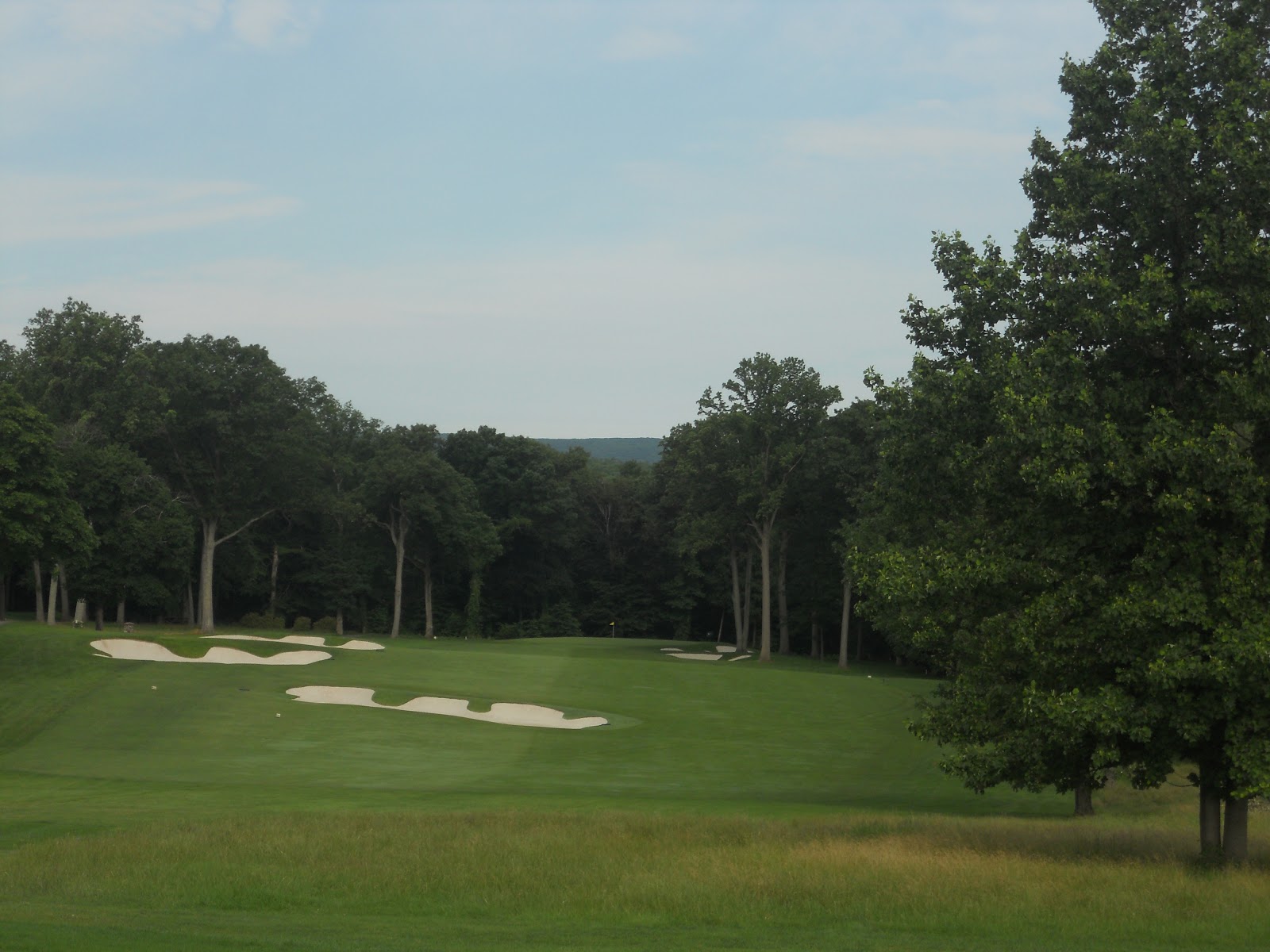
A challenging 200+yard uphill tee shot, 9th hole

If Florida has the most golf courses of any state in the union (1200+) then Palm Beach has got to have the record by county.  Despite the endless amount of golf that can be played, many of the options are disappointingly similar.  Much of the dissapointment, especially in South Florida, comes from a somewhat standard “look” to the bunkers and maintained areas of the golf course.  

Sharp, clean bunker edges and manicured collars around the fairways and greens is a common style for golf courses of this region.  There has to be some extra cost associated with maintenance of the is caliber (Doral Blue).
The West Palm Beach Golf Course shows its true colors by highlighting a sandy wide open expanse for golf.  With an assist from Mark McCumber in 2009, the original Dick Wilson design was renovated by scraping away dozens of acres of maintained turf and overgrowth in the roughs.  Uncovered is a public golfing oasis tucked in-between the ocean, just 2 miles east and I-95, which runs adjacent to the front nine.  There is still a great natural setting despite the brief distraction of the highway (not every golf course is blessed with perfect location).  With constant ocean breezes that sweep across the entire layout there is always a challenge to negotiate.
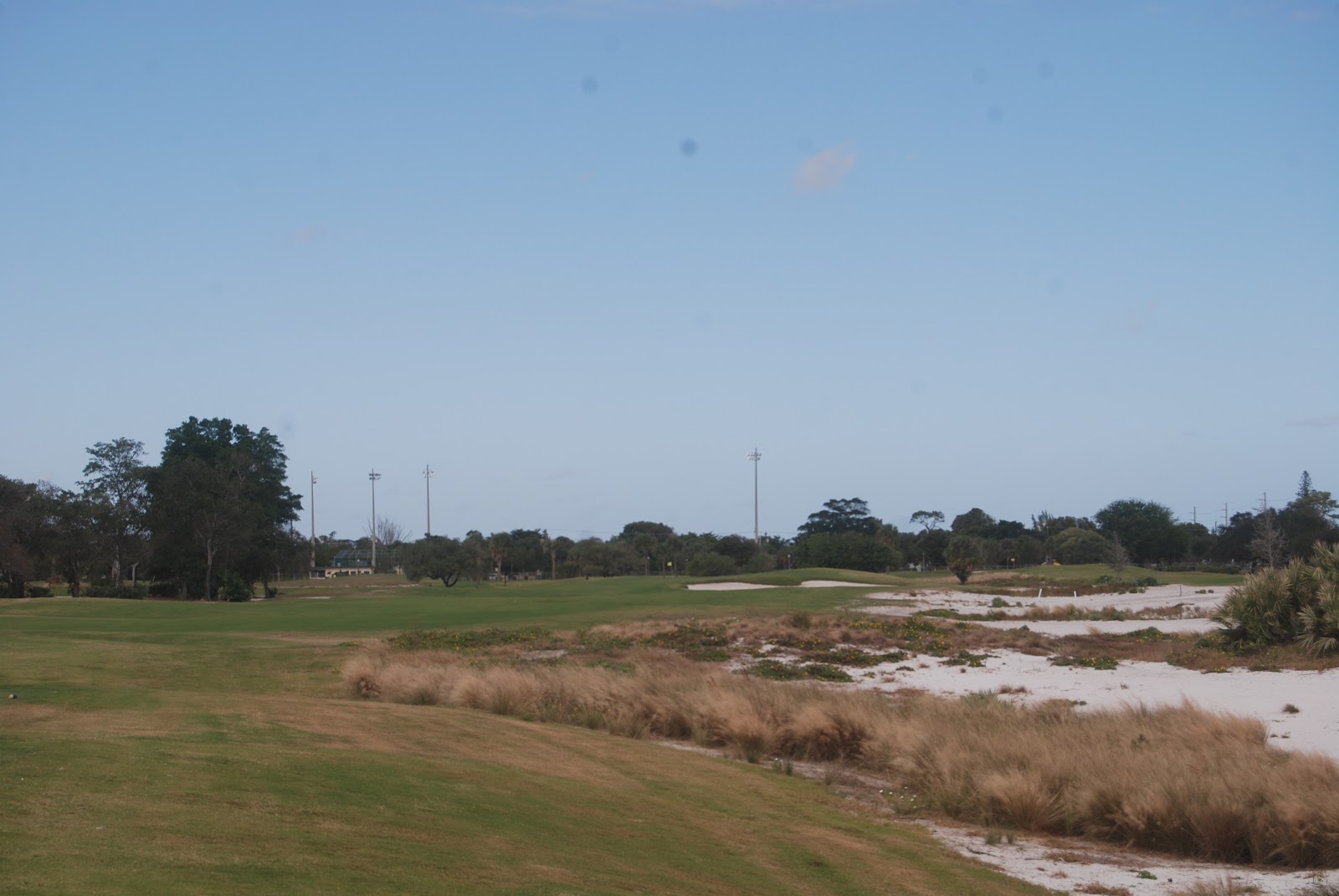
Rough edges seemlessly blend with the surrounding landscape while sandy ground and scrubby plants dot the areas bewteen fairways.


For a $40 green fee one should certainly enjoy an afternoon here.  The experience was such a nice change of pace to what I have come to expect from Florida golf.  There is no water, no O.B., and hardly any bermuda rough!  West Palm Beach has got an inland links of its own, who knew?!


Wednesday, December 21, 2011

Bunker work at Dismal River

While at the Dismal River Golf Club, working for Renaissance Golf Design I asked project manager Brian Slawnik if I could tackle a proposed green side bunker on the 15th hole.  I was pleasantly surprised to hear the words "sure, why not".  My primary duties would be preparing 6 greens and several tees for seeding that Fall but I worked harder knowing that I now had some creative license to begin the bunker construction. 

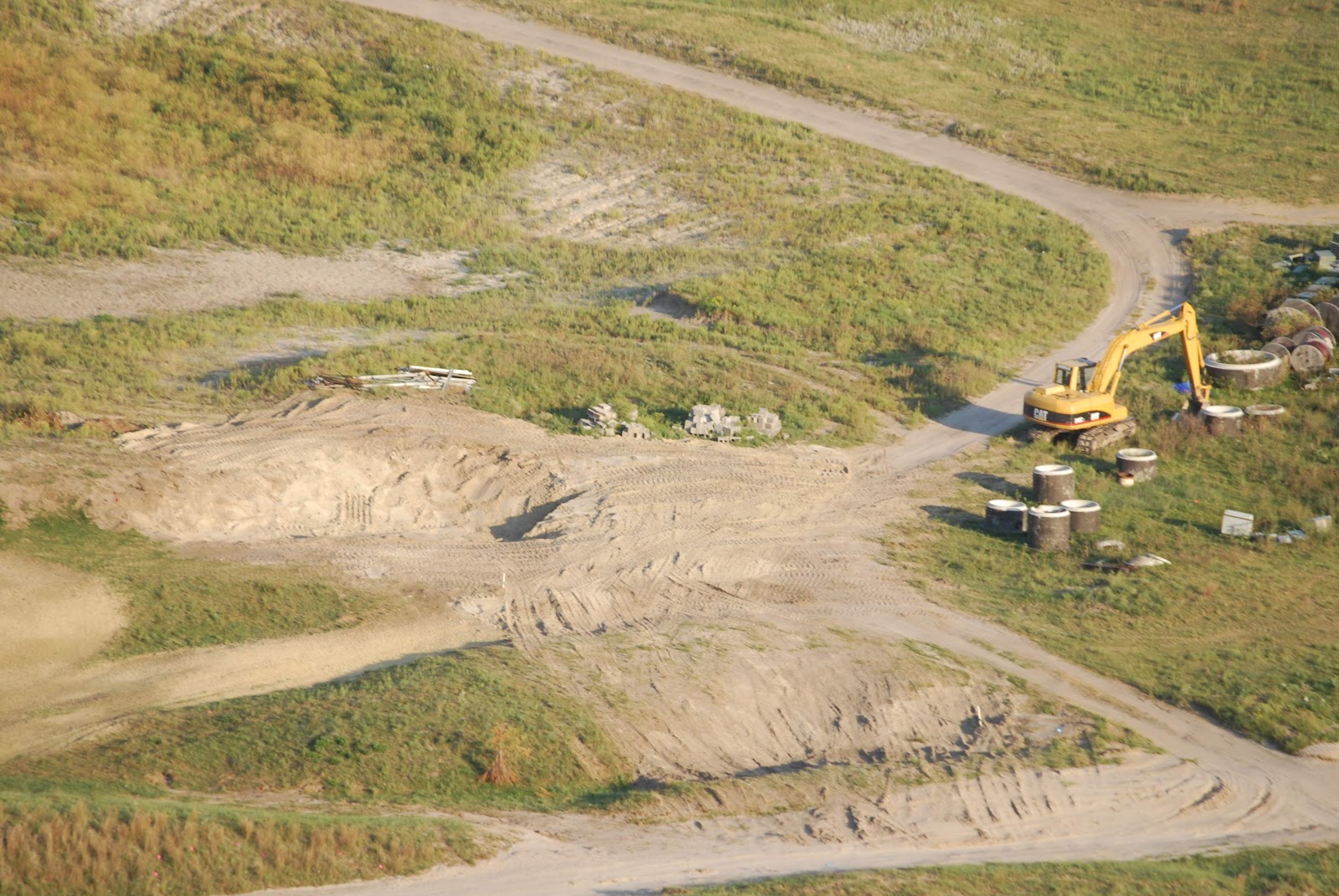
It turned out to be a tremendous learning experience in visualization, time and labor management, and handling all the material that I was excavating.  What started out as a raw exposed dump site turned out to be a strategically significant addition to the golf hole.  Illustrated below are several photos which chronicle the process.


A raw pit of sand, just waiting to be sculpted.
   
A rough start, this thing needs a lot of love.


A view from above shows the dramatic fairway contours adjacent to the bunker.  Much of the excavated material was used to soften and conect these contours so that they would be practical for play and maintenance.


Above and Below:  Chunks of sod where brought in to define the top edge and formalize the bunker so that it would not completely blow away in the harsh winter months of Western Nebraska.  Looking forward to seeing how things evolve in the coming season.


Sunday, November 6, 2011

Classic Golf Architecture-- Does Form=Function?

Touring golf courses in the Northeast has been a great pleasure for me this Fall.  There are literally dozens of seriously great golf courses all within 1-3 hours drive (depending on traffic) of NYC alone.  A truly unmatched stock of golden age golf.  Since starting work on Paramount's (A.W. Tillinghast) restoration I have been able to see Sleepy Hollow (C.B. Macdonald), St. George's (Devereux Emmet), and Whippoorwill CC (Charles Banks), all built in the early 20th century.  Touring these courses in addition to an intensive study of Paramount has allowed me to think critically about how the architecture of this period was influenced not only by the technological limitations of the time but also the way that golf was played.

During my recent visit to St. George's in Stony Brook, Long Island I was struck in particular by the green complex of the short par four, 4th hole.  Guarding the front of the green and hidden from view is a massive pit filled on the bottom with sand.  I could not tell the bunker was there until I very nearly walked into it upon approaching the green.  After playing my ball out of that sandy cavern (and taking bogey) I began to think how this feature fit into the overall scheme of the design.  Upon observing the surrounding landscape and playing the next few holes I came to the conclusion that the bunker was not necessarily apart of any grand scheme in the design but merely a function of the need to see the target.  The property is quite abrupt and hilly, in particular where the end of the 4th hole came to be.  By digging a massive 10 foot pit, Emmet and Co. were able to use that material to prop up the surface of the green so that it could be viewed from the fairway.  In this case it seemed apparent that the form of the green was vastly a necessity of its function, to see the target. 

By creating a bunker feature, Emmet was able to get the most out of his green site, which would be otherwise out of view, fitting it into the rest of the routing.  Also to consider, in the absence of ideal ground conditions (ie. sandy soils) and heavy machinery the "push-up" style of green construction was the easiest and most effective method.  By flopping the soil behind the pit and forming a raised platform, the putting green could easily shed water and the ensuing bunkers could be used to add strategic and visual interest around the green, both a positive consequence of function influencing form.

I believe that many of the golf courses built before the advent of the steam shovel, aka bull dozer,(with the exception of a few modern design) are as close to equating form and function than at any other time in golf construction.  Some today would call Emmet's building style at St.George's minimalism, I say this is the logical practice of golf course construction.

Paramount Country Club-- A Restoration..

#1 Green atop the hill

My latest project has taken me back home, as luck would have it, only 30 minutes drive from a free meal at my parents house!  I will be helping to restore the little known, yet impressive, Paramount Country Club in New City, NY. An A.W. Tillinghast design (1921), the golf course is part of the former estate of Adolph Zukor, movie mogul and founder of Paramount Pictures.  Golf holes here rise and fall over very hilly terrain on the front nine and follow some more interesting fairway contours on the back nine as well.  Many of the greens pitch steeply from back to front, a typical feature of many classically designed golf courses.  Over the next two Fall seasons, Paramount Country Club will be receiving its due justice under the guidance of architect Jim Urbina and superintendant Brian Chapin.  The scope of the restoration, outlined in Urbina's master plan, embraces the inherent history of early 20th century golf architecture, restoring original bunkering schemes and shapes and sizes of the greens.  Paramount is a golf course with great bones in good hands, it will surely make a lasting impression.
#5 Featuring newly restored fairway bunkers